Monday, November 9
Mountain Rescue Services - Call-outs on the rise in 2009?
October's Mountain Rescue magazine dropped onto the doormat a few weeks ago, but it was only the past few days that I found time to sit down and peruse it at leisure.
As a member of Basecamp, the MRT Support Club for England & Wales, this comes as part of the membership package and is always an interesting read. Content is geared (naturally) towards MRT personnel, but there is usually a couple of items that catch my interest as a non-MRT reader (See July's piece concerning mobile telephone access to emergency services)
The latest issue was no exception with a report that Keswick MRT calls hit 100 in late August, an increase of 77% compared to 2008, and a 66% increase in alerts. North Wales also experienced a 20% rise over 2008 figures.
Whilst exceptional, this is not necessarily the pattern across all MR Teams.
But given a 14% increase in the number of individual team involvement call-outs across the Lake District area as a whole, prior to the August Bank Holiday, its clear that the demand on some MRTs is in danger of becoming untenable. Particularly for the many volunteers who freely give of their time, and live with the disruption to their personal & work life.
Basecamp proffers one solution, suggesting increasing awareness amongst groups on mountain activities.
I've a few more radical ideas concerning individual responsibility, self-assist, common sense, and unnatural hiding places for improperly used mobile phones.
But perhaps its better I resist the temptation to go into detail.
Well for the present, at least.
Labels: Lake District, Mountain Rescue Team(MRT), Mountain Resuce Team MRT BASECAMP, Wales
Sunday, July 26
Mobile Phone and no 999 call?
My July copy of the 'Mountain Rescue' magazine arrived earlier this week, courtesy of a MRT Basecamp subscription taken out at this year's NEC Outdoors Show.
Its always a thought provoking read. Mostly it deals in the technicalities concerning Mountain Rescue Teams, kit concerns, and their approach to situations which most of us pray we will never encounter. But along the way there are ideas (and some very tempting adverts) which can challenge the thinking Outdoor person.
In the latest issue Mark Lewis covers the way mobile networks deal with 999/112 calls. Or more precisely the way that they don't.
If your mobile can't get a network signal from your provider, then a 999 call is impossible.
Its an important feature that used to be available some years ago. Emergency calls from a mobile would try to Roam to other mobile network providers, to get a signal. The same way your UK SIM will Roam for a suitable provider/signal when using a mobile phone abroad.
However, in the UK, this facility for 999 calls was switched off due to the lack of CLI (Caller Line Identification) which meant hoax calls were untraceable.
Presently the only way around this is to use a non-UK simcard which will then search for alternative networks. (So one trick may be to keep a spare non UK SIM in the 1st-aid kit - something cheap, but with a lifetime credit - such as this offering for instance)
Mark reports that OFCOM intend to reinstate 999 Roaming for Vodafone, O2, T-Mobile, Orange & Three by the end of 2009 (More detail on the OFCOM site)
Only problem - the MRT can't call back. A concern as in many cases this is necessary to check details and co-ordinate rescue activity.
Yes you've guessed it. A 999 call from the phone, courtesy of Roaming, but no way back to it if the initial provider signal remains absent.
So a slight success in that the 999 call gets through. But then a brick wall.
OFCOM's minutes from April 2009 don't shed any light as to whether this omission is to be resolved, but do indicate that technical trials are taking some time and the function isn't likely to appear until early 2010.
As a non technical observer, surely some method to switch roaming on/off for a specific mobile telephone number could be quickly made available for a limited period (say 48 hours) following a MRT request, via their local Police contact, to central mobile phone providers?
After all there are many facilities open to the Police and other State Security groups that are pressed into use where mobile phones are concerned. For instance tracing a mobile phone's location via the cell network.
If these complex functional requirements are readily accessible to the Right People Asking, then surely a simple idea, with proper controls, isn't that difficult to achieve?
Now surely it can't be that simple? Or perhaps it is.
Meanwhile the MRT continue to push for 2-way communication.
It may be "good to talk", but for some its bloody essential at times.
Meanwhile - check out the MRT's MRMap site.
"The MRMap software gives Mountain Rescue Search Managers,Team Leaders and Control Room staff the ability to better manage their team bygiving continous GPS positioning, sent over the team radio and shown onto a computerscreen back at base (or even a laptop in a team vehicle!)"
Another simple idea, that might easily save a life one day.
Labels: Gear, Mountain Rescue Team(MRT), Mountain Resuce Team MRT BASECAMP
Thursday, June 14
Flashing lights and getting help
And while I'm writing the trip up, some timely advice from Langdale/Ambleside MRT:
"Lights can 'flash' for many reasons.
A star low on the horizon can flash when observed by a slightly drunk person! Someone walking down a path after dark by the light of a headtorch can appear to be flashing their lights, as their line of sight alternates between distant to underfoot. This is a common cause of 'flashing' lights.
In determining whether the lights are 'flashing' it's worth trying to work out if they are stationary or moving up or down.
As a rule lights going uphill don't need rescuing. Lights going downhill PROBABLY don't need rescuing.
Only stationary lights probably warrant some serious study. Obviously any flashing lights accompanied by shouts for help need further investigation"
Advice courtesy of their website (8th June)
Worth knowing I thought.Labels: Lake District, Mountain Resuce Team MRT BASECAMP
Friday, May 4
Mountain Rescue Teams - BASECAMP
I mentioned last month the MRT Supporter's initiative.
The Basecamp site is now up running, with info on how to join.
Early days yet but i'ts getting there if you want to show your support.Labels: Mountain Resuce Team MRT BASECAMP
Monday, April 16
National Supporters' Group for Mountain Rescue
Thanks to Outdoors Magic for the tip-off on this.
A new Mountain Resuce Team group - BaseCamp - has been set-up as a national supporters group for MRT teams across England & Wales. It's aim , to supplement local team fundraising with a national initiative based on an annual membership.
Cost is £24 for quarterly copies of MR Magazine + enamel badge + car sticker.
As someone who tries never to pass an MRT charity box without dropping some coins in, I'll be checking this one out, to bolster the regular GAYE pittance that I donate to LAMRT. I've never had cause to use the MRT services, but I have the great admiration and respect for the time and effort they put into what is primarily a voluntary organisation.
Nothing on the MRT main site as yet but I did trip over a forum which I'd not spotted before.
Ah well, yet something else to occupy my on-line time.Labels: Mountain Resuce Team MRT BASECAMP
Wednesday, April 4
Death Walks Behind You?
Snippets from a BBC news item this morning 'Lakeland Walking Deaths Highest for 17 years'
"The number of people fatally injured while walking in the Lakes has reached a 17-year high, a new report reveals" (Lake District Search and Mountain Rescue Association) ......There has been growing problem with people taking the easy option when they feel that they are lost..... Rather than trying to use a map and compass to find their location....... they're using mobile phones to call for help.
Sadly the self reliance and basic skills required to sort out a problem on the hills seems to be lacking in more and more outdoor adventurers these days.
I'm part way through May's issue of Trail, and for the inexperienced it can read like a treasure chest of oh so easily gained thrills and experience (Let's ignore the 'advertising article/sponsored by' tags on far too many articles. Where on earth did this sort of low level marketing come from?)
Most of the article photos are taken in conditions of good visibility, which has to be the case otherwise what's the point of the picture? But I'm becoming concerned that the 'leisurisation' of the hills, the over simplification of the terrain and weather will be increasingly at the cost of people's lives, and increased risks to the rescue services.
And how much does the phrasing used in major articles ('The Mission'; 'Fitness Academy') lead to overconfidence, or more an inappropriate frame of mind and attitude that is required to be on some of the fells?
I'm not just having a pop at Trail Magazine here. It's just happens to be the one that is freshest in my mind at present. And there are of course the usual admonishments about safety. But it's the glossy stuff that draws the unwary eye in.
The timing of the report ties in with the pre Easter holiday exodus, so hopefully the message might sink home in good time.
Whilst I'm on the subject of the outdoor media, one of the criticisms I have with the recent Wainwright Walks series on BBC 4 TV was the inference that wayfinding on the hills is done just by reference to one of AW's route guides. I can't remember one appearance in four programmes of a map or compass.
A great series, visually superb, and much to applaud, but its the little things that bring something like this tumbling down.
On a similar theme, last weekend was the first sunny/warm Sunday of 2007.
On Monday, of the three BBC County news sites I check, two listed multiple motorcycle deaths/serious injury.
As a biker of 30+ years the reason appears pretty self evident. The first outing since probably late last summer, on too powerful machinery, mixing in amongst the Sunday day tripper traffic. And it's the older people involved, rather than the kids on 'peds.
I used to give myself six months to get used to a new bike's handling, performance and braking before I would count myself mostly in-tune with its capabilities. And that was daily usage in all weathers. Only then could I really let rip when circumstances allowed.
At times I've ridden up to eight different motorcycles in one day at shop ride-outs. But I'd control the bike rather than the other way around. Not try to hammer them into the ground.
It seems some people will continue to learn the hard way, and that it is only a matter of time before legislation to 'protect' the Born-Again Motorcyclist (they're not bikers!) starts to be rolled out to 'prevent this death toll on our roads' (source - The sun Sept 2007?)
Oh and there's no prize for identifying the song title that heads this post.
Be careful out there folks. Your life is not a practice run. Labels: Lake District, Mountain Resuce Team MRT BASECAMP
Thursday, August 3
Walking - Safety & Route Cards - The what if?
 As a walker on the hills, especially solo, safety has to be taken serious. Even a windless and a sunny day walking along a good track can change.
With one small stumble.
A quick scroll through the Mountain Rescue Teams incident reports (essential reading IMHO) quickly throw up sunny days gone wrong, particularly for the ill equipped or down right stupid. The hills are a wonderful play area, but unlike your local park help is usually not merely a yell away.
I don't mean to sound alarmist on this, just realistic.
That's Lesson One.
Read the introduction any good walking guide - they all give the same advice in the preface before the real book content starts.
Correct footwear; Carry map, compass, 1st aid kit, spare clothes, food, water (Kendal mint cake?) survival bag & waterproofs. Allow for sudden weather changes. Leave word of where you've gone.
It's that last piece of advice that is this post's message.
To quote the Ramblers' Association website advice:
"Before setting out, you should leave a copy of the card with a responsible person, and notify them on your safe return. In the event of an accident, help will arrive more quickly if rescuers have detailed information about your route. If you feel a detailed card would unnecessarily restrict your movements, at least leave a few notes about your intended whereabouts"
The Mountaineering Council of Scotland have a slightly less authoratitive tone, with some extremely well thought out considerations, but the message is the same
1. Tell someone where you're going
2. Check in regularly.
In the event of the unforseen, this is what a Mountain Rescue Team will use to find and help you, in the extreme case you're unable to help yourself.
Route cards can vary in layout and content for example this this or this but the basic information is the same. Here I am; Come find me.
If you like thisdetailled approach then one benefit can be a much closer attention to route detail, even down to the compass bearings etc, which is why the GPS related software usually offers routecard production as a feature.
But for me the route card is too prescriptive.
I know my main route, and how I intend to travel along it. If I fancy a sideways wander, I'm know from experience that I won't be too concerned about what I wrote on a piece of paper 300 miles away. I enjoy the freedom of the hills, not stomping along a tarmac road at a stated compass bearing and walking pace, worrying if I'm 20 minutes behind a schedule. Takes the U out of fUn.
Another drawback of a card. Where to leave it? Mounted on the dashboard of a parked car seems to me to be an invitation to the criminally minded. Not quite what I want to worry about high in the hills for a few days.
So, for what it's worth, here's my approach.
I write down my start point, day, and time. Then I provide a list of key features that I intend to cover, with escape routes that I may use in the event of bad weather (likely) or injury (fingers crossed - not something I've ever used, or hope to)
And now the important piece.
I arrange a regular check-in (usually nightly) via mobile phone with home to let them know whereabouts on my route I am, or any changes I've come up with since last we had contact. In the event I'm moving into a mobile signal shadow for any extended period of time, I arrange my call-in time accordingly.
In the event the signal is available but poor, a simple SMS message is all that's necessary. However a useable signal is usually available on a ridge, within sight of any small hamlet these days (I speak from personal experience here, of the Lake District, Wales & Dartmoor. Of Scotland I've no experience - but please leave a comment if you can help)
A quick aside - Mobile phones - love or hate them, they are here to stay and can have a use. Just remember the golden rule. Switch it on when you want to use it. And then switch it off. Battery life measured in weeks!
Anyway back to the plot ....
The standing instruction I always leave:
'Not heard from me for 2-4 hours beyond the pre-arranged check-in time? Dial 999 for a MRT call-out!' The time period is dependant on the terrain I expect to be travelling over.
I've wondered about that last instruction. I'd be mortified to be the cause of an unneccessary MRT call-out. Those guys already have their hands full, especially at this time of year, with the less aware. As a responsible adult I accept the risks associated with my particular pleasure, and will take reasonable steps to minimise them. And in case of difficulties I've warm clothes, tent, food and bedding to sit out most eventualities and to properly work out a reasonable escape plan, rather than complicate things in a panic.
But in the event my check-in seems likely to breach the time factor, I've given myself long enough to get off the hillside and to the nearest contact point - village, pub, bus route or worse case, a road to flag a car down.
Better that than MRT on the hills and missing their tea.
;-)
A minor disruption for me, as a new check-in can be arranged and then I'm back up that slope.
That's my safety net, and it's worked for me over the years. A mix of good sensey & flexibility from my perspective.
My tactics, and my opinion. For what it's worth
Stay safe out there. Remember indestructable immortality is for comic books. Take a few simple and sensible precautions.
And enjoy them thar hills, partners.Labels: Backpacking Advice, Lake District, Mountain Resuce Team MRT BASECAMP, Trip Planning
All site material © John Hee - ask before you snatch
Labels: Lake District, Mountain Rescue Team(MRT), Mountain Resuce Team MRT BASECAMP, Wales


Mobile Phone and no 999 call?
My July copy of the 'Mountain Rescue' magazine arrived earlier this week, courtesy of a MRT Basecamp subscription taken out at this year's NEC Outdoors Show.
Its always a thought provoking read. Mostly it deals in the technicalities concerning Mountain Rescue Teams, kit concerns, and their approach to situations which most of us pray we will never encounter. But along the way there are ideas (and some very tempting adverts) which can challenge the thinking Outdoor person.
In the latest issue Mark Lewis covers the way mobile networks deal with 999/112 calls. Or more precisely the way that they don't.
If your mobile can't get a network signal from your provider, then a 999 call is impossible.
Its an important feature that used to be available some years ago. Emergency calls from a mobile would try to Roam to other mobile network providers, to get a signal. The same way your UK SIM will Roam for a suitable provider/signal when using a mobile phone abroad.
However, in the UK, this facility for 999 calls was switched off due to the lack of CLI (Caller Line Identification) which meant hoax calls were untraceable.
Presently the only way around this is to use a non-UK simcard which will then search for alternative networks. (So one trick may be to keep a spare non UK SIM in the 1st-aid kit - something cheap, but with a lifetime credit - such as this offering for instance)
Mark reports that OFCOM intend to reinstate 999 Roaming for Vodafone, O2, T-Mobile, Orange & Three by the end of 2009 (More detail on the OFCOM site)
Only problem - the MRT can't call back. A concern as in many cases this is necessary to check details and co-ordinate rescue activity.
Yes you've guessed it. A 999 call from the phone, courtesy of Roaming, but no way back to it if the initial provider signal remains absent.
So a slight success in that the 999 call gets through. But then a brick wall.
OFCOM's minutes from April 2009 don't shed any light as to whether this omission is to be resolved, but do indicate that technical trials are taking some time and the function isn't likely to appear until early 2010.
As a non technical observer, surely some method to switch roaming on/off for a specific mobile telephone number could be quickly made available for a limited period (say 48 hours) following a MRT request, via their local Police contact, to central mobile phone providers?
After all there are many facilities open to the Police and other State Security groups that are pressed into use where mobile phones are concerned. For instance tracing a mobile phone's location via the cell network.
If these complex functional requirements are readily accessible to the Right People Asking, then surely a simple idea, with proper controls, isn't that difficult to achieve?
Now surely it can't be that simple? Or perhaps it is.
Meanwhile the MRT continue to push for 2-way communication.
It may be "good to talk", but for some its bloody essential at times.
Meanwhile - check out the MRT's MRMap site.
"The MRMap software gives Mountain Rescue Search Managers,Team Leaders and Control Room staff the ability to better manage their team bygiving continous GPS positioning, sent over the team radio and shown onto a computerscreen back at base (or even a laptop in a team vehicle!)"
Another simple idea, that might easily save a life one day.
Labels: Gear, Mountain Rescue Team(MRT), Mountain Resuce Team MRT BASECAMP
Thursday, June 14
Flashing lights and getting help
And while I'm writing the trip up, some timely advice from Langdale/Ambleside MRT:
"Lights can 'flash' for many reasons.
A star low on the horizon can flash when observed by a slightly drunk person! Someone walking down a path after dark by the light of a headtorch can appear to be flashing their lights, as their line of sight alternates between distant to underfoot. This is a common cause of 'flashing' lights.
In determining whether the lights are 'flashing' it's worth trying to work out if they are stationary or moving up or down.
As a rule lights going uphill don't need rescuing. Lights going downhill PROBABLY don't need rescuing.
Only stationary lights probably warrant some serious study. Obviously any flashing lights accompanied by shouts for help need further investigation"
Advice courtesy of their website (8th June)
Worth knowing I thought.Labels: Lake District, Mountain Resuce Team MRT BASECAMP
Friday, May 4
Mountain Rescue Teams - BASECAMP
I mentioned last month the MRT Supporter's initiative.
The Basecamp site is now up running, with info on how to join.
Early days yet but i'ts getting there if you want to show your support.Labels: Mountain Resuce Team MRT BASECAMP
Monday, April 16
National Supporters' Group for Mountain Rescue
Thanks to Outdoors Magic for the tip-off on this.
A new Mountain Resuce Team group - BaseCamp - has been set-up as a national supporters group for MRT teams across England & Wales. It's aim , to supplement local team fundraising with a national initiative based on an annual membership.
Cost is £24 for quarterly copies of MR Magazine + enamel badge + car sticker.
As someone who tries never to pass an MRT charity box without dropping some coins in, I'll be checking this one out, to bolster the regular GAYE pittance that I donate to LAMRT. I've never had cause to use the MRT services, but I have the great admiration and respect for the time and effort they put into what is primarily a voluntary organisation.
Nothing on the MRT main site as yet but I did trip over a forum which I'd not spotted before.
Ah well, yet something else to occupy my on-line time.Labels: Mountain Resuce Team MRT BASECAMP
Wednesday, April 4
Death Walks Behind You?
Snippets from a BBC news item this morning 'Lakeland Walking Deaths Highest for 17 years'
"The number of people fatally injured while walking in the Lakes has reached a 17-year high, a new report reveals" (Lake District Search and Mountain Rescue Association) ......There has been growing problem with people taking the easy option when they feel that they are lost..... Rather than trying to use a map and compass to find their location....... they're using mobile phones to call for help.
Sadly the self reliance and basic skills required to sort out a problem on the hills seems to be lacking in more and more outdoor adventurers these days.
I'm part way through May's issue of Trail, and for the inexperienced it can read like a treasure chest of oh so easily gained thrills and experience (Let's ignore the 'advertising article/sponsored by' tags on far too many articles. Where on earth did this sort of low level marketing come from?)
Most of the article photos are taken in conditions of good visibility, which has to be the case otherwise what's the point of the picture? But I'm becoming concerned that the 'leisurisation' of the hills, the over simplification of the terrain and weather will be increasingly at the cost of people's lives, and increased risks to the rescue services.
And how much does the phrasing used in major articles ('The Mission'; 'Fitness Academy') lead to overconfidence, or more an inappropriate frame of mind and attitude that is required to be on some of the fells?
I'm not just having a pop at Trail Magazine here. It's just happens to be the one that is freshest in my mind at present. And there are of course the usual admonishments about safety. But it's the glossy stuff that draws the unwary eye in.
The timing of the report ties in with the pre Easter holiday exodus, so hopefully the message might sink home in good time.
Whilst I'm on the subject of the outdoor media, one of the criticisms I have with the recent Wainwright Walks series on BBC 4 TV was the inference that wayfinding on the hills is done just by reference to one of AW's route guides. I can't remember one appearance in four programmes of a map or compass.
A great series, visually superb, and much to applaud, but its the little things that bring something like this tumbling down.
On a similar theme, last weekend was the first sunny/warm Sunday of 2007.
On Monday, of the three BBC County news sites I check, two listed multiple motorcycle deaths/serious injury.
As a biker of 30+ years the reason appears pretty self evident. The first outing since probably late last summer, on too powerful machinery, mixing in amongst the Sunday day tripper traffic. And it's the older people involved, rather than the kids on 'peds.
I used to give myself six months to get used to a new bike's handling, performance and braking before I would count myself mostly in-tune with its capabilities. And that was daily usage in all weathers. Only then could I really let rip when circumstances allowed.
At times I've ridden up to eight different motorcycles in one day at shop ride-outs. But I'd control the bike rather than the other way around. Not try to hammer them into the ground.
It seems some people will continue to learn the hard way, and that it is only a matter of time before legislation to 'protect' the Born-Again Motorcyclist (they're not bikers!) starts to be rolled out to 'prevent this death toll on our roads' (source - The sun Sept 2007?)
Oh and there's no prize for identifying the song title that heads this post.
Be careful out there folks. Your life is not a practice run. Labels: Lake District, Mountain Resuce Team MRT BASECAMP
Thursday, August 3
Walking - Safety & Route Cards - The what if?
As a walker on the hills, especially solo, safety has to be taken serious. Even a windless and a sunny day walking along a good track can change.
With one small stumble.
A quick scroll through the Mountain Rescue Teams incident reports (essential reading IMHO) quickly throw up sunny days gone wrong, particularly for the ill equipped or down right stupid. The hills are a wonderful play area, but unlike your local park help is usually not merely a yell away.
I don't mean to sound alarmist on this, just realistic.
That's Lesson One.
Read the introduction any good walking guide - they all give the same advice in the preface before the real book content starts.
Correct footwear; Carry map, compass, 1st aid kit, spare clothes, food, water (Kendal mint cake?) survival bag & waterproofs. Allow for sudden weather changes. Leave word of where you've gone.
It's that last piece of advice that is this post's message.
To quote the Ramblers' Association website advice:
"Before setting out, you should leave a copy of the card with a responsible person, and notify them on your safe return. In the event of an accident, help will arrive more quickly if rescuers have detailed information about your route. If you feel a detailed card would unnecessarily restrict your movements, at least leave a few notes about your intended whereabouts"
The Mountaineering Council of Scotland have a slightly less authoratitive tone, with some extremely well thought out considerations, but the message is the same
1. Tell someone where you're going
2. Check in regularly.
In the event of the unforseen, this is what a Mountain Rescue Team will use to find and help you, in the extreme case you're unable to help yourself.
Route cards can vary in layout and content for example this this or this but the basic information is the same. Here I am; Come find me.
If you like thisdetailled approach then one benefit can be a much closer attention to route detail, even down to the compass bearings etc, which is why the GPS related software usually offers routecard production as a feature.
But for me the route card is too prescriptive.
I know my main route, and how I intend to travel along it. If I fancy a sideways wander, I'm know from experience that I won't be too concerned about what I wrote on a piece of paper 300 miles away. I enjoy the freedom of the hills, not stomping along a tarmac road at a stated compass bearing and walking pace, worrying if I'm 20 minutes behind a schedule. Takes the U out of fUn.
Another drawback of a card. Where to leave it? Mounted on the dashboard of a parked car seems to me to be an invitation to the criminally minded. Not quite what I want to worry about high in the hills for a few days.
So, for what it's worth, here's my approach.
I write down my start point, day, and time. Then I provide a list of key features that I intend to cover, with escape routes that I may use in the event of bad weather (likely) or injury (fingers crossed - not something I've ever used, or hope to)
And now the important piece.
I arrange a regular check-in (usually nightly) via mobile phone with home to let them know whereabouts on my route I am, or any changes I've come up with since last we had contact. In the event I'm moving into a mobile signal shadow for any extended period of time, I arrange my call-in time accordingly.
In the event the signal is available but poor, a simple SMS message is all that's necessary. However a useable signal is usually available on a ridge, within sight of any small hamlet these days (I speak from personal experience here, of the Lake District, Wales & Dartmoor. Of Scotland I've no experience - but please leave a comment if you can help)
A quick aside - Mobile phones - love or hate them, they are here to stay and can have a use. Just remember the golden rule. Switch it on when you want to use it. And then switch it off. Battery life measured in weeks!
Anyway back to the plot ....
The standing instruction I always leave:
'Not heard from me for 2-4 hours beyond the pre-arranged check-in time? Dial 999 for a MRT call-out!' The time period is dependant on the terrain I expect to be travelling over.
I've wondered about that last instruction. I'd be mortified to be the cause of an unneccessary MRT call-out. Those guys already have their hands full, especially at this time of year, with the less aware. As a responsible adult I accept the risks associated with my particular pleasure, and will take reasonable steps to minimise them. And in case of difficulties I've warm clothes, tent, food and bedding to sit out most eventualities and to properly work out a reasonable escape plan, rather than complicate things in a panic.
But in the event my check-in seems likely to breach the time factor, I've given myself long enough to get off the hillside and to the nearest contact point - village, pub, bus route or worse case, a road to flag a car down.
Better that than MRT on the hills and missing their tea.
;-)
A minor disruption for me, as a new check-in can be arranged and then I'm back up that slope.
That's my safety net, and it's worked for me over the years. A mix of good sensey & flexibility from my perspective.
My tactics, and my opinion. For what it's worth
Stay safe out there. Remember indestructable immortality is for comic books. Take a few simple and sensible precautions.
And enjoy them thar hills, partners.Labels: Backpacking Advice, Lake District, Mountain Resuce Team MRT BASECAMP, Trip Planning
All site material © John Hee - ask before you snatch
Its always a thought provoking read. Mostly it deals in the technicalities concerning Mountain Rescue Teams, kit concerns, and their approach to situations which most of us pray we will never encounter. But along the way there are ideas (and some very tempting adverts) which can challenge the thinking Outdoor person.
In the latest issue Mark Lewis covers the way mobile networks deal with 999/112 calls. Or more precisely the way that they don't.
If your mobile can't get a network signal from your provider, then a 999 call is impossible.
Its an important feature that used to be available some years ago. Emergency calls from a mobile would try to Roam to other mobile network providers, to get a signal. The same way your UK SIM will Roam for a suitable provider/signal when using a mobile phone abroad.
However, in the UK, this facility for 999 calls was switched off due to the lack of CLI (Caller Line Identification) which meant hoax calls were untraceable.
Presently the only way around this is to use a non-UK simcard which will then search for alternative networks. (So one trick may be to keep a spare non UK SIM in the 1st-aid kit - something cheap, but with a lifetime credit - such as this offering for instance)
Mark reports that OFCOM intend to reinstate 999 Roaming for Vodafone, O2, T-Mobile, Orange & Three by the end of 2009 (More detail on the OFCOM site)
Only problem - the MRT can't call back. A concern as in many cases this is necessary to check details and co-ordinate rescue activity.
Yes you've guessed it. A 999 call from the phone, courtesy of Roaming, but no way back to it if the initial provider signal remains absent.
So a slight success in that the 999 call gets through. But then a brick wall.
OFCOM's minutes from April 2009 don't shed any light as to whether this omission is to be resolved, but do indicate that technical trials are taking some time and the function isn't likely to appear until early 2010.
As a non technical observer, surely some method to switch roaming on/off for a specific mobile telephone number could be quickly made available for a limited period (say 48 hours) following a MRT request, via their local Police contact, to central mobile phone providers?
After all there are many facilities open to the Police and other State Security groups that are pressed into use where mobile phones are concerned. For instance tracing a mobile phone's location via the cell network.
If these complex functional requirements are readily accessible to the Right People Asking, then surely a simple idea, with proper controls, isn't that difficult to achieve?
Now surely it can't be that simple? Or perhaps it is.
Meanwhile the MRT continue to push for 2-way communication.
It may be "good to talk", but for some its bloody essential at times.
Meanwhile - check out the MRT's MRMap site.
"The MRMap software gives Mountain Rescue Search Managers,Team Leaders and Control Room staff the ability to better manage their team bygiving continous GPS positioning, sent over the team radio and shown onto a computerscreen back at base (or even a laptop in a team vehicle!)"
Another simple idea, that might easily save a life one day.
Labels: Gear, Mountain Rescue Team(MRT), Mountain Resuce Team MRT BASECAMP
Flashing lights and getting help
And while I'm writing the trip up, some timely advice from Langdale/Ambleside MRT:
"Lights can 'flash' for many reasons.
A star low on the horizon can flash when observed by a slightly drunk person! Someone walking down a path after dark by the light of a headtorch can appear to be flashing their lights, as their line of sight alternates between distant to underfoot. This is a common cause of 'flashing' lights.
In determining whether the lights are 'flashing' it's worth trying to work out if they are stationary or moving up or down.
As a rule lights going uphill don't need rescuing. Lights going downhill PROBABLY don't need rescuing.
Only stationary lights probably warrant some serious study. Obviously any flashing lights accompanied by shouts for help need further investigation"
Advice courtesy of their website (8th June)
Worth knowing I thought.Labels: Lake District, Mountain Resuce Team MRT BASECAMP
Friday, May 4
Mountain Rescue Teams - BASECAMP
I mentioned last month the MRT Supporter's initiative.
The Basecamp site is now up running, with info on how to join.
Early days yet but i'ts getting there if you want to show your support.Labels: Mountain Resuce Team MRT BASECAMP
Monday, April 16
National Supporters' Group for Mountain Rescue
Thanks to Outdoors Magic for the tip-off on this.
A new Mountain Resuce Team group - BaseCamp - has been set-up as a national supporters group for MRT teams across England & Wales. It's aim , to supplement local team fundraising with a national initiative based on an annual membership.
Cost is £24 for quarterly copies of MR Magazine + enamel badge + car sticker.
As someone who tries never to pass an MRT charity box without dropping some coins in, I'll be checking this one out, to bolster the regular GAYE pittance that I donate to LAMRT. I've never had cause to use the MRT services, but I have the great admiration and respect for the time and effort they put into what is primarily a voluntary organisation.
Nothing on the MRT main site as yet but I did trip over a forum which I'd not spotted before.
Ah well, yet something else to occupy my on-line time.Labels: Mountain Resuce Team MRT BASECAMP
Wednesday, April 4
Death Walks Behind You?
Snippets from a BBC news item this morning 'Lakeland Walking Deaths Highest for 17 years'
"The number of people fatally injured while walking in the Lakes has reached a 17-year high, a new report reveals" (Lake District Search and Mountain Rescue Association) ......There has been growing problem with people taking the easy option when they feel that they are lost..... Rather than trying to use a map and compass to find their location....... they're using mobile phones to call for help.
Sadly the self reliance and basic skills required to sort out a problem on the hills seems to be lacking in more and more outdoor adventurers these days.
I'm part way through May's issue of Trail, and for the inexperienced it can read like a treasure chest of oh so easily gained thrills and experience (Let's ignore the 'advertising article/sponsored by' tags on far too many articles. Where on earth did this sort of low level marketing come from?)
Most of the article photos are taken in conditions of good visibility, which has to be the case otherwise what's the point of the picture? But I'm becoming concerned that the 'leisurisation' of the hills, the over simplification of the terrain and weather will be increasingly at the cost of people's lives, and increased risks to the rescue services.
And how much does the phrasing used in major articles ('The Mission'; 'Fitness Academy') lead to overconfidence, or more an inappropriate frame of mind and attitude that is required to be on some of the fells?
I'm not just having a pop at Trail Magazine here. It's just happens to be the one that is freshest in my mind at present. And there are of course the usual admonishments about safety. But it's the glossy stuff that draws the unwary eye in.
The timing of the report ties in with the pre Easter holiday exodus, so hopefully the message might sink home in good time.
Whilst I'm on the subject of the outdoor media, one of the criticisms I have with the recent Wainwright Walks series on BBC 4 TV was the inference that wayfinding on the hills is done just by reference to one of AW's route guides. I can't remember one appearance in four programmes of a map or compass.
A great series, visually superb, and much to applaud, but its the little things that bring something like this tumbling down.
On a similar theme, last weekend was the first sunny/warm Sunday of 2007.
On Monday, of the three BBC County news sites I check, two listed multiple motorcycle deaths/serious injury.
As a biker of 30+ years the reason appears pretty self evident. The first outing since probably late last summer, on too powerful machinery, mixing in amongst the Sunday day tripper traffic. And it's the older people involved, rather than the kids on 'peds.
I used to give myself six months to get used to a new bike's handling, performance and braking before I would count myself mostly in-tune with its capabilities. And that was daily usage in all weathers. Only then could I really let rip when circumstances allowed.
At times I've ridden up to eight different motorcycles in one day at shop ride-outs. But I'd control the bike rather than the other way around. Not try to hammer them into the ground.
It seems some people will continue to learn the hard way, and that it is only a matter of time before legislation to 'protect' the Born-Again Motorcyclist (they're not bikers!) starts to be rolled out to 'prevent this death toll on our roads' (source - The sun Sept 2007?)
Oh and there's no prize for identifying the song title that heads this post.
Be careful out there folks. Your life is not a practice run. Labels: Lake District, Mountain Resuce Team MRT BASECAMP
Thursday, August 3
Walking - Safety & Route Cards - The what if?
As a walker on the hills, especially solo, safety has to be taken serious. Even a windless and a sunny day walking along a good track can change.
With one small stumble.
A quick scroll through the Mountain Rescue Teams incident reports (essential reading IMHO) quickly throw up sunny days gone wrong, particularly for the ill equipped or down right stupid. The hills are a wonderful play area, but unlike your local park help is usually not merely a yell away.
I don't mean to sound alarmist on this, just realistic.
That's Lesson One.
Read the introduction any good walking guide - they all give the same advice in the preface before the real book content starts.
Correct footwear; Carry map, compass, 1st aid kit, spare clothes, food, water (Kendal mint cake?) survival bag & waterproofs. Allow for sudden weather changes. Leave word of where you've gone.
It's that last piece of advice that is this post's message.
To quote the Ramblers' Association website advice:
"Before setting out, you should leave a copy of the card with a responsible person, and notify them on your safe return. In the event of an accident, help will arrive more quickly if rescuers have detailed information about your route. If you feel a detailed card would unnecessarily restrict your movements, at least leave a few notes about your intended whereabouts"
The Mountaineering Council of Scotland have a slightly less authoratitive tone, with some extremely well thought out considerations, but the message is the same
1. Tell someone where you're going
2. Check in regularly.
In the event of the unforseen, this is what a Mountain Rescue Team will use to find and help you, in the extreme case you're unable to help yourself.
Route cards can vary in layout and content for example this this or this but the basic information is the same. Here I am; Come find me.
If you like thisdetailled approach then one benefit can be a much closer attention to route detail, even down to the compass bearings etc, which is why the GPS related software usually offers routecard production as a feature.
But for me the route card is too prescriptive.
I know my main route, and how I intend to travel along it. If I fancy a sideways wander, I'm know from experience that I won't be too concerned about what I wrote on a piece of paper 300 miles away. I enjoy the freedom of the hills, not stomping along a tarmac road at a stated compass bearing and walking pace, worrying if I'm 20 minutes behind a schedule. Takes the U out of fUn.
Another drawback of a card. Where to leave it? Mounted on the dashboard of a parked car seems to me to be an invitation to the criminally minded. Not quite what I want to worry about high in the hills for a few days.
So, for what it's worth, here's my approach.
I write down my start point, day, and time. Then I provide a list of key features that I intend to cover, with escape routes that I may use in the event of bad weather (likely) or injury (fingers crossed - not something I've ever used, or hope to)
And now the important piece.
I arrange a regular check-in (usually nightly) via mobile phone with home to let them know whereabouts on my route I am, or any changes I've come up with since last we had contact. In the event I'm moving into a mobile signal shadow for any extended period of time, I arrange my call-in time accordingly.
In the event the signal is available but poor, a simple SMS message is all that's necessary. However a useable signal is usually available on a ridge, within sight of any small hamlet these days (I speak from personal experience here, of the Lake District, Wales & Dartmoor. Of Scotland I've no experience - but please leave a comment if you can help)
A quick aside - Mobile phones - love or hate them, they are here to stay and can have a use. Just remember the golden rule. Switch it on when you want to use it. And then switch it off. Battery life measured in weeks!
Anyway back to the plot ....
The standing instruction I always leave:
'Not heard from me for 2-4 hours beyond the pre-arranged check-in time? Dial 999 for a MRT call-out!' The time period is dependant on the terrain I expect to be travelling over.
I've wondered about that last instruction. I'd be mortified to be the cause of an unneccessary MRT call-out. Those guys already have their hands full, especially at this time of year, with the less aware. As a responsible adult I accept the risks associated with my particular pleasure, and will take reasonable steps to minimise them. And in case of difficulties I've warm clothes, tent, food and bedding to sit out most eventualities and to properly work out a reasonable escape plan, rather than complicate things in a panic.
But in the event my check-in seems likely to breach the time factor, I've given myself long enough to get off the hillside and to the nearest contact point - village, pub, bus route or worse case, a road to flag a car down.
Better that than MRT on the hills and missing their tea.
;-)
A minor disruption for me, as a new check-in can be arranged and then I'm back up that slope.
That's my safety net, and it's worked for me over the years. A mix of good sensey & flexibility from my perspective.
My tactics, and my opinion. For what it's worth
Stay safe out there. Remember indestructable immortality is for comic books. Take a few simple and sensible precautions.
And enjoy them thar hills, partners.Labels: Backpacking Advice, Lake District, Mountain Resuce Team MRT BASECAMP, Trip Planning
All site material © John Hee - ask before you snatch
"Lights can 'flash' for many reasons.
A star low on the horizon can flash when observed by a slightly drunk person! Someone walking down a path after dark by the light of a headtorch can appear to be flashing their lights, as their line of sight alternates between distant to underfoot. This is a common cause of 'flashing' lights.
In determining whether the lights are 'flashing' it's worth trying to work out if they are stationary or moving up or down.
As a rule lights going uphill don't need rescuing. Lights going downhill PROBABLY don't need rescuing.
Only stationary lights probably warrant some serious study. Obviously any flashing lights accompanied by shouts for help need further investigation"
Advice courtesy of their website (8th June)
Worth knowing I thought.
Labels: Lake District, Mountain Resuce Team MRT BASECAMP
Mountain Rescue Teams - BASECAMP
I mentioned last month the MRT Supporter's initiative.
The Basecamp site is now up running, with info on how to join.
Early days yet but i'ts getting there if you want to show your support.Labels: Mountain Resuce Team MRT BASECAMP
Monday, April 16
National Supporters' Group for Mountain Rescue
Thanks to Outdoors Magic for the tip-off on this.
A new Mountain Resuce Team group - BaseCamp - has been set-up as a national supporters group for MRT teams across England & Wales. It's aim , to supplement local team fundraising with a national initiative based on an annual membership.
Cost is £24 for quarterly copies of MR Magazine + enamel badge + car sticker.
As someone who tries never to pass an MRT charity box without dropping some coins in, I'll be checking this one out, to bolster the regular GAYE pittance that I donate to LAMRT. I've never had cause to use the MRT services, but I have the great admiration and respect for the time and effort they put into what is primarily a voluntary organisation.
Nothing on the MRT main site as yet but I did trip over a forum which I'd not spotted before.
Ah well, yet something else to occupy my on-line time.Labels: Mountain Resuce Team MRT BASECAMP
Wednesday, April 4
Death Walks Behind You?
Snippets from a BBC news item this morning 'Lakeland Walking Deaths Highest for 17 years'
"The number of people fatally injured while walking in the Lakes has reached a 17-year high, a new report reveals" (Lake District Search and Mountain Rescue Association) ......There has been growing problem with people taking the easy option when they feel that they are lost..... Rather than trying to use a map and compass to find their location....... they're using mobile phones to call for help.
Sadly the self reliance and basic skills required to sort out a problem on the hills seems to be lacking in more and more outdoor adventurers these days.
I'm part way through May's issue of Trail, and for the inexperienced it can read like a treasure chest of oh so easily gained thrills and experience (Let's ignore the 'advertising article/sponsored by' tags on far too many articles. Where on earth did this sort of low level marketing come from?)
Most of the article photos are taken in conditions of good visibility, which has to be the case otherwise what's the point of the picture? But I'm becoming concerned that the 'leisurisation' of the hills, the over simplification of the terrain and weather will be increasingly at the cost of people's lives, and increased risks to the rescue services.
And how much does the phrasing used in major articles ('The Mission'; 'Fitness Academy') lead to overconfidence, or more an inappropriate frame of mind and attitude that is required to be on some of the fells?
I'm not just having a pop at Trail Magazine here. It's just happens to be the one that is freshest in my mind at present. And there are of course the usual admonishments about safety. But it's the glossy stuff that draws the unwary eye in.
The timing of the report ties in with the pre Easter holiday exodus, so hopefully the message might sink home in good time.
Whilst I'm on the subject of the outdoor media, one of the criticisms I have with the recent Wainwright Walks series on BBC 4 TV was the inference that wayfinding on the hills is done just by reference to one of AW's route guides. I can't remember one appearance in four programmes of a map or compass.
A great series, visually superb, and much to applaud, but its the little things that bring something like this tumbling down.
On a similar theme, last weekend was the first sunny/warm Sunday of 2007.
On Monday, of the three BBC County news sites I check, two listed multiple motorcycle deaths/serious injury.
As a biker of 30+ years the reason appears pretty self evident. The first outing since probably late last summer, on too powerful machinery, mixing in amongst the Sunday day tripper traffic. And it's the older people involved, rather than the kids on 'peds.
I used to give myself six months to get used to a new bike's handling, performance and braking before I would count myself mostly in-tune with its capabilities. And that was daily usage in all weathers. Only then could I really let rip when circumstances allowed.
At times I've ridden up to eight different motorcycles in one day at shop ride-outs. But I'd control the bike rather than the other way around. Not try to hammer them into the ground.
It seems some people will continue to learn the hard way, and that it is only a matter of time before legislation to 'protect' the Born-Again Motorcyclist (they're not bikers!) starts to be rolled out to 'prevent this death toll on our roads' (source - The sun Sept 2007?)
Oh and there's no prize for identifying the song title that heads this post.
Be careful out there folks. Your life is not a practice run. Labels: Lake District, Mountain Resuce Team MRT BASECAMP
Thursday, August 3
Walking - Safety & Route Cards - The what if?
As a walker on the hills, especially solo, safety has to be taken serious. Even a windless and a sunny day walking along a good track can change.
With one small stumble.
A quick scroll through the Mountain Rescue Teams incident reports (essential reading IMHO) quickly throw up sunny days gone wrong, particularly for the ill equipped or down right stupid. The hills are a wonderful play area, but unlike your local park help is usually not merely a yell away.
I don't mean to sound alarmist on this, just realistic.
That's Lesson One.
Read the introduction any good walking guide - they all give the same advice in the preface before the real book content starts.
Correct footwear; Carry map, compass, 1st aid kit, spare clothes, food, water (Kendal mint cake?) survival bag & waterproofs. Allow for sudden weather changes. Leave word of where you've gone.
It's that last piece of advice that is this post's message.
To quote the Ramblers' Association website advice:
"Before setting out, you should leave a copy of the card with a responsible person, and notify them on your safe return. In the event of an accident, help will arrive more quickly if rescuers have detailed information about your route. If you feel a detailed card would unnecessarily restrict your movements, at least leave a few notes about your intended whereabouts"
The Mountaineering Council of Scotland have a slightly less authoratitive tone, with some extremely well thought out considerations, but the message is the same
1. Tell someone where you're going
2. Check in regularly.
In the event of the unforseen, this is what a Mountain Rescue Team will use to find and help you, in the extreme case you're unable to help yourself.
Route cards can vary in layout and content for example this this or this but the basic information is the same. Here I am; Come find me.
If you like thisdetailled approach then one benefit can be a much closer attention to route detail, even down to the compass bearings etc, which is why the GPS related software usually offers routecard production as a feature.
But for me the route card is too prescriptive.
I know my main route, and how I intend to travel along it. If I fancy a sideways wander, I'm know from experience that I won't be too concerned about what I wrote on a piece of paper 300 miles away. I enjoy the freedom of the hills, not stomping along a tarmac road at a stated compass bearing and walking pace, worrying if I'm 20 minutes behind a schedule. Takes the U out of fUn.
Another drawback of a card. Where to leave it? Mounted on the dashboard of a parked car seems to me to be an invitation to the criminally minded. Not quite what I want to worry about high in the hills for a few days.
So, for what it's worth, here's my approach.
I write down my start point, day, and time. Then I provide a list of key features that I intend to cover, with escape routes that I may use in the event of bad weather (likely) or injury (fingers crossed - not something I've ever used, or hope to)
And now the important piece.
I arrange a regular check-in (usually nightly) via mobile phone with home to let them know whereabouts on my route I am, or any changes I've come up with since last we had contact. In the event I'm moving into a mobile signal shadow for any extended period of time, I arrange my call-in time accordingly.
In the event the signal is available but poor, a simple SMS message is all that's necessary. However a useable signal is usually available on a ridge, within sight of any small hamlet these days (I speak from personal experience here, of the Lake District, Wales & Dartmoor. Of Scotland I've no experience - but please leave a comment if you can help)
A quick aside - Mobile phones - love or hate them, they are here to stay and can have a use. Just remember the golden rule. Switch it on when you want to use it. And then switch it off. Battery life measured in weeks!
Anyway back to the plot ....
The standing instruction I always leave:
'Not heard from me for 2-4 hours beyond the pre-arranged check-in time? Dial 999 for a MRT call-out!' The time period is dependant on the terrain I expect to be travelling over.
I've wondered about that last instruction. I'd be mortified to be the cause of an unneccessary MRT call-out. Those guys already have their hands full, especially at this time of year, with the less aware. As a responsible adult I accept the risks associated with my particular pleasure, and will take reasonable steps to minimise them. And in case of difficulties I've warm clothes, tent, food and bedding to sit out most eventualities and to properly work out a reasonable escape plan, rather than complicate things in a panic.
But in the event my check-in seems likely to breach the time factor, I've given myself long enough to get off the hillside and to the nearest contact point - village, pub, bus route or worse case, a road to flag a car down.
Better that than MRT on the hills and missing their tea.
;-)
A minor disruption for me, as a new check-in can be arranged and then I'm back up that slope.
That's my safety net, and it's worked for me over the years. A mix of good sensey & flexibility from my perspective.
My tactics, and my opinion. For what it's worth
Stay safe out there. Remember indestructable immortality is for comic books. Take a few simple and sensible precautions.
And enjoy them thar hills, partners.Labels: Backpacking Advice, Lake District, Mountain Resuce Team MRT BASECAMP, Trip Planning
All site material © John Hee - ask before you snatch
The Basecamp site is now up running, with info on how to join.
Early days yet but i'ts getting there if you want to show your support.
Labels: Mountain Resuce Team MRT BASECAMP
National Supporters' Group for Mountain Rescue
Thanks to Outdoors Magic for the tip-off on this.
A new Mountain Resuce Team group - BaseCamp - has been set-up as a national supporters group for MRT teams across England & Wales. It's aim , to supplement local team fundraising with a national initiative based on an annual membership.
Cost is £24 for quarterly copies of MR Magazine + enamel badge + car sticker.
As someone who tries never to pass an MRT charity box without dropping some coins in, I'll be checking this one out, to bolster the regular GAYE pittance that I donate to LAMRT. I've never had cause to use the MRT services, but I have the great admiration and respect for the time and effort they put into what is primarily a voluntary organisation.
Nothing on the MRT main site as yet but I did trip over a forum which I'd not spotted before.
Ah well, yet something else to occupy my on-line time.Labels: Mountain Resuce Team MRT BASECAMP
Wednesday, April 4
Death Walks Behind You?
Snippets from a BBC news item this morning 'Lakeland Walking Deaths Highest for 17 years'
"The number of people fatally injured while walking in the Lakes has reached a 17-year high, a new report reveals" (Lake District Search and Mountain Rescue Association) ......There has been growing problem with people taking the easy option when they feel that they are lost..... Rather than trying to use a map and compass to find their location....... they're using mobile phones to call for help.
Sadly the self reliance and basic skills required to sort out a problem on the hills seems to be lacking in more and more outdoor adventurers these days.
I'm part way through May's issue of Trail, and for the inexperienced it can read like a treasure chest of oh so easily gained thrills and experience (Let's ignore the 'advertising article/sponsored by' tags on far too many articles. Where on earth did this sort of low level marketing come from?)
Most of the article photos are taken in conditions of good visibility, which has to be the case otherwise what's the point of the picture? But I'm becoming concerned that the 'leisurisation' of the hills, the over simplification of the terrain and weather will be increasingly at the cost of people's lives, and increased risks to the rescue services.
And how much does the phrasing used in major articles ('The Mission'; 'Fitness Academy') lead to overconfidence, or more an inappropriate frame of mind and attitude that is required to be on some of the fells?
I'm not just having a pop at Trail Magazine here. It's just happens to be the one that is freshest in my mind at present. And there are of course the usual admonishments about safety. But it's the glossy stuff that draws the unwary eye in.
The timing of the report ties in with the pre Easter holiday exodus, so hopefully the message might sink home in good time.
Whilst I'm on the subject of the outdoor media, one of the criticisms I have with the recent Wainwright Walks series on BBC 4 TV was the inference that wayfinding on the hills is done just by reference to one of AW's route guides. I can't remember one appearance in four programmes of a map or compass.
A great series, visually superb, and much to applaud, but its the little things that bring something like this tumbling down.
On a similar theme, last weekend was the first sunny/warm Sunday of 2007.
On Monday, of the three BBC County news sites I check, two listed multiple motorcycle deaths/serious injury.
As a biker of 30+ years the reason appears pretty self evident. The first outing since probably late last summer, on too powerful machinery, mixing in amongst the Sunday day tripper traffic. And it's the older people involved, rather than the kids on 'peds.
I used to give myself six months to get used to a new bike's handling, performance and braking before I would count myself mostly in-tune with its capabilities. And that was daily usage in all weathers. Only then could I really let rip when circumstances allowed.
At times I've ridden up to eight different motorcycles in one day at shop ride-outs. But I'd control the bike rather than the other way around. Not try to hammer them into the ground.
It seems some people will continue to learn the hard way, and that it is only a matter of time before legislation to 'protect' the Born-Again Motorcyclist (they're not bikers!) starts to be rolled out to 'prevent this death toll on our roads' (source - The sun Sept 2007?)
Oh and there's no prize for identifying the song title that heads this post.
Be careful out there folks. Your life is not a practice run. Labels: Lake District, Mountain Resuce Team MRT BASECAMP
Thursday, August 3
Walking - Safety & Route Cards - The what if?
As a walker on the hills, especially solo, safety has to be taken serious. Even a windless and a sunny day walking along a good track can change.
With one small stumble.
A quick scroll through the Mountain Rescue Teams incident reports (essential reading IMHO) quickly throw up sunny days gone wrong, particularly for the ill equipped or down right stupid. The hills are a wonderful play area, but unlike your local park help is usually not merely a yell away.
I don't mean to sound alarmist on this, just realistic.
That's Lesson One.
Read the introduction any good walking guide - they all give the same advice in the preface before the real book content starts.
Correct footwear; Carry map, compass, 1st aid kit, spare clothes, food, water (Kendal mint cake?) survival bag & waterproofs. Allow for sudden weather changes. Leave word of where you've gone.
It's that last piece of advice that is this post's message.
To quote the Ramblers' Association website advice:
"Before setting out, you should leave a copy of the card with a responsible person, and notify them on your safe return. In the event of an accident, help will arrive more quickly if rescuers have detailed information about your route. If you feel a detailed card would unnecessarily restrict your movements, at least leave a few notes about your intended whereabouts"
The Mountaineering Council of Scotland have a slightly less authoratitive tone, with some extremely well thought out considerations, but the message is the same
1. Tell someone where you're going
2. Check in regularly.
In the event of the unforseen, this is what a Mountain Rescue Team will use to find and help you, in the extreme case you're unable to help yourself.
Route cards can vary in layout and content for example this this or this but the basic information is the same. Here I am; Come find me.
If you like thisdetailled approach then one benefit can be a much closer attention to route detail, even down to the compass bearings etc, which is why the GPS related software usually offers routecard production as a feature.
But for me the route card is too prescriptive.
I know my main route, and how I intend to travel along it. If I fancy a sideways wander, I'm know from experience that I won't be too concerned about what I wrote on a piece of paper 300 miles away. I enjoy the freedom of the hills, not stomping along a tarmac road at a stated compass bearing and walking pace, worrying if I'm 20 minutes behind a schedule. Takes the U out of fUn.
Another drawback of a card. Where to leave it? Mounted on the dashboard of a parked car seems to me to be an invitation to the criminally minded. Not quite what I want to worry about high in the hills for a few days.
So, for what it's worth, here's my approach.
I write down my start point, day, and time. Then I provide a list of key features that I intend to cover, with escape routes that I may use in the event of bad weather (likely) or injury (fingers crossed - not something I've ever used, or hope to)
And now the important piece.
I arrange a regular check-in (usually nightly) via mobile phone with home to let them know whereabouts on my route I am, or any changes I've come up with since last we had contact. In the event I'm moving into a mobile signal shadow for any extended period of time, I arrange my call-in time accordingly.
In the event the signal is available but poor, a simple SMS message is all that's necessary. However a useable signal is usually available on a ridge, within sight of any small hamlet these days (I speak from personal experience here, of the Lake District, Wales & Dartmoor. Of Scotland I've no experience - but please leave a comment if you can help)
A quick aside - Mobile phones - love or hate them, they are here to stay and can have a use. Just remember the golden rule. Switch it on when you want to use it. And then switch it off. Battery life measured in weeks!
Anyway back to the plot ....
The standing instruction I always leave:
'Not heard from me for 2-4 hours beyond the pre-arranged check-in time? Dial 999 for a MRT call-out!' The time period is dependant on the terrain I expect to be travelling over.
I've wondered about that last instruction. I'd be mortified to be the cause of an unneccessary MRT call-out. Those guys already have their hands full, especially at this time of year, with the less aware. As a responsible adult I accept the risks associated with my particular pleasure, and will take reasonable steps to minimise them. And in case of difficulties I've warm clothes, tent, food and bedding to sit out most eventualities and to properly work out a reasonable escape plan, rather than complicate things in a panic.
But in the event my check-in seems likely to breach the time factor, I've given myself long enough to get off the hillside and to the nearest contact point - village, pub, bus route or worse case, a road to flag a car down.
Better that than MRT on the hills and missing their tea.
;-)
A minor disruption for me, as a new check-in can be arranged and then I'm back up that slope.
That's my safety net, and it's worked for me over the years. A mix of good sensey & flexibility from my perspective.
My tactics, and my opinion. For what it's worth
Stay safe out there. Remember indestructable immortality is for comic books. Take a few simple and sensible precautions.
And enjoy them thar hills, partners.Labels: Backpacking Advice, Lake District, Mountain Resuce Team MRT BASECAMP, Trip Planning
All site material © John Hee - ask before you snatch
A new Mountain Resuce Team group - BaseCamp - has been set-up as a national supporters group for MRT teams across England & Wales. It's aim , to supplement local team fundraising with a national initiative based on an annual membership.
Cost is £24 for quarterly copies of MR Magazine + enamel badge + car sticker.
As someone who tries never to pass an MRT charity box without dropping some coins in, I'll be checking this one out, to bolster the regular GAYE pittance that I donate to LAMRT. I've never had cause to use the MRT services, but I have the great admiration and respect for the time and effort they put into what is primarily a voluntary organisation.
Nothing on the MRT main site as yet but I did trip over a forum which I'd not spotted before.
Ah well, yet something else to occupy my on-line time.
Labels: Mountain Resuce Team MRT BASECAMP
Death Walks Behind You?
Snippets from a BBC news item this morning 'Lakeland Walking Deaths Highest for 17 years'
"The number of people fatally injured while walking in the Lakes has reached a 17-year high, a new report reveals" (Lake District Search and Mountain Rescue Association) ......There has been growing problem with people taking the easy option when they feel that they are lost..... Rather than trying to use a map and compass to find their location....... they're using mobile phones to call for help.
Sadly the self reliance and basic skills required to sort out a problem on the hills seems to be lacking in more and more outdoor adventurers these days.
I'm part way through May's issue of Trail, and for the inexperienced it can read like a treasure chest of oh so easily gained thrills and experience (Let's ignore the 'advertising article/sponsored by' tags on far too many articles. Where on earth did this sort of low level marketing come from?)
Most of the article photos are taken in conditions of good visibility, which has to be the case otherwise what's the point of the picture? But I'm becoming concerned that the 'leisurisation' of the hills, the over simplification of the terrain and weather will be increasingly at the cost of people's lives, and increased risks to the rescue services.
And how much does the phrasing used in major articles ('The Mission'; 'Fitness Academy') lead to overconfidence, or more an inappropriate frame of mind and attitude that is required to be on some of the fells?
I'm not just having a pop at Trail Magazine here. It's just happens to be the one that is freshest in my mind at present. And there are of course the usual admonishments about safety. But it's the glossy stuff that draws the unwary eye in.
The timing of the report ties in with the pre Easter holiday exodus, so hopefully the message might sink home in good time.
Whilst I'm on the subject of the outdoor media, one of the criticisms I have with the recent Wainwright Walks series on BBC 4 TV was the inference that wayfinding on the hills is done just by reference to one of AW's route guides. I can't remember one appearance in four programmes of a map or compass.
A great series, visually superb, and much to applaud, but its the little things that bring something like this tumbling down.
On a similar theme, last weekend was the first sunny/warm Sunday of 2007.
On Monday, of the three BBC County news sites I check, two listed multiple motorcycle deaths/serious injury.
As a biker of 30+ years the reason appears pretty self evident. The first outing since probably late last summer, on too powerful machinery, mixing in amongst the Sunday day tripper traffic. And it's the older people involved, rather than the kids on 'peds.
I used to give myself six months to get used to a new bike's handling, performance and braking before I would count myself mostly in-tune with its capabilities. And that was daily usage in all weathers. Only then could I really let rip when circumstances allowed.
At times I've ridden up to eight different motorcycles in one day at shop ride-outs. But I'd control the bike rather than the other way around. Not try to hammer them into the ground.
It seems some people will continue to learn the hard way, and that it is only a matter of time before legislation to 'protect' the Born-Again Motorcyclist (they're not bikers!) starts to be rolled out to 'prevent this death toll on our roads' (source - The sun Sept 2007?)
Oh and there's no prize for identifying the song title that heads this post.
Be careful out there folks. Your life is not a practice run. Labels: Lake District, Mountain Resuce Team MRT BASECAMP
Thursday, August 3
Walking - Safety & Route Cards - The what if?
As a walker on the hills, especially solo, safety has to be taken serious. Even a windless and a sunny day walking along a good track can change.
With one small stumble.
A quick scroll through the Mountain Rescue Teams incident reports (essential reading IMHO) quickly throw up sunny days gone wrong, particularly for the ill equipped or down right stupid. The hills are a wonderful play area, but unlike your local park help is usually not merely a yell away.
I don't mean to sound alarmist on this, just realistic.
That's Lesson One.
Read the introduction any good walking guide - they all give the same advice in the preface before the real book content starts.
Correct footwear; Carry map, compass, 1st aid kit, spare clothes, food, water (Kendal mint cake?) survival bag & waterproofs. Allow for sudden weather changes. Leave word of where you've gone.
It's that last piece of advice that is this post's message.
To quote the Ramblers' Association website advice:
"Before setting out, you should leave a copy of the card with a responsible person, and notify them on your safe return. In the event of an accident, help will arrive more quickly if rescuers have detailed information about your route. If you feel a detailed card would unnecessarily restrict your movements, at least leave a few notes about your intended whereabouts"
The Mountaineering Council of Scotland have a slightly less authoratitive tone, with some extremely well thought out considerations, but the message is the same
1. Tell someone where you're going
2. Check in regularly.
In the event of the unforseen, this is what a Mountain Rescue Team will use to find and help you, in the extreme case you're unable to help yourself.
Route cards can vary in layout and content for example this this or this but the basic information is the same. Here I am; Come find me.
If you like thisdetailled approach then one benefit can be a much closer attention to route detail, even down to the compass bearings etc, which is why the GPS related software usually offers routecard production as a feature.
But for me the route card is too prescriptive.
I know my main route, and how I intend to travel along it. If I fancy a sideways wander, I'm know from experience that I won't be too concerned about what I wrote on a piece of paper 300 miles away. I enjoy the freedom of the hills, not stomping along a tarmac road at a stated compass bearing and walking pace, worrying if I'm 20 minutes behind a schedule. Takes the U out of fUn.
Another drawback of a card. Where to leave it? Mounted on the dashboard of a parked car seems to me to be an invitation to the criminally minded. Not quite what I want to worry about high in the hills for a few days.
So, for what it's worth, here's my approach.
I write down my start point, day, and time. Then I provide a list of key features that I intend to cover, with escape routes that I may use in the event of bad weather (likely) or injury (fingers crossed - not something I've ever used, or hope to)
And now the important piece.
I arrange a regular check-in (usually nightly) via mobile phone with home to let them know whereabouts on my route I am, or any changes I've come up with since last we had contact. In the event I'm moving into a mobile signal shadow for any extended period of time, I arrange my call-in time accordingly.
In the event the signal is available but poor, a simple SMS message is all that's necessary. However a useable signal is usually available on a ridge, within sight of any small hamlet these days (I speak from personal experience here, of the Lake District, Wales & Dartmoor. Of Scotland I've no experience - but please leave a comment if you can help)
A quick aside - Mobile phones - love or hate them, they are here to stay and can have a use. Just remember the golden rule. Switch it on when you want to use it. And then switch it off. Battery life measured in weeks!
Anyway back to the plot ....
The standing instruction I always leave:
'Not heard from me for 2-4 hours beyond the pre-arranged check-in time? Dial 999 for a MRT call-out!' The time period is dependant on the terrain I expect to be travelling over.
I've wondered about that last instruction. I'd be mortified to be the cause of an unneccessary MRT call-out. Those guys already have their hands full, especially at this time of year, with the less aware. As a responsible adult I accept the risks associated with my particular pleasure, and will take reasonable steps to minimise them. And in case of difficulties I've warm clothes, tent, food and bedding to sit out most eventualities and to properly work out a reasonable escape plan, rather than complicate things in a panic.
But in the event my check-in seems likely to breach the time factor, I've given myself long enough to get off the hillside and to the nearest contact point - village, pub, bus route or worse case, a road to flag a car down.
Better that than MRT on the hills and missing their tea.
;-)
A minor disruption for me, as a new check-in can be arranged and then I'm back up that slope.
That's my safety net, and it's worked for me over the years. A mix of good sensey & flexibility from my perspective.
My tactics, and my opinion. For what it's worth
Stay safe out there. Remember indestructable immortality is for comic books. Take a few simple and sensible precautions.
And enjoy them thar hills, partners.Labels: Backpacking Advice, Lake District, Mountain Resuce Team MRT BASECAMP, Trip Planning
All site material © John Hee - ask before you snatch
"The number of people fatally injured while walking in the Lakes has reached a 17-year high, a new report reveals" (Lake District Search and Mountain Rescue Association) ......There has been growing problem with people taking the easy option when they feel that they are lost..... Rather than trying to use a map and compass to find their location....... they're using mobile phones to call for help.
Sadly the self reliance and basic skills required to sort out a problem on the hills seems to be lacking in more and more outdoor adventurers these days.
I'm part way through May's issue of Trail, and for the inexperienced it can read like a treasure chest of oh so easily gained thrills and experience (Let's ignore the 'advertising article/sponsored by' tags on far too many articles. Where on earth did this sort of low level marketing come from?)
Most of the article photos are taken in conditions of good visibility, which has to be the case otherwise what's the point of the picture? But I'm becoming concerned that the 'leisurisation' of the hills, the over simplification of the terrain and weather will be increasingly at the cost of people's lives, and increased risks to the rescue services.
And how much does the phrasing used in major articles ('The Mission'; 'Fitness Academy') lead to overconfidence, or more an inappropriate frame of mind and attitude that is required to be on some of the fells?
I'm not just having a pop at Trail Magazine here. It's just happens to be the one that is freshest in my mind at present. And there are of course the usual admonishments about safety. But it's the glossy stuff that draws the unwary eye in.
The timing of the report ties in with the pre Easter holiday exodus, so hopefully the message might sink home in good time.
Whilst I'm on the subject of the outdoor media, one of the criticisms I have with the recent Wainwright Walks series on BBC 4 TV was the inference that wayfinding on the hills is done just by reference to one of AW's route guides. I can't remember one appearance in four programmes of a map or compass.
A great series, visually superb, and much to applaud, but its the little things that bring something like this tumbling down.
On a similar theme, last weekend was the first sunny/warm Sunday of 2007.
On Monday, of the three BBC County news sites I check, two listed multiple motorcycle deaths/serious injury.
As a biker of 30+ years the reason appears pretty self evident. The first outing since probably late last summer, on too powerful machinery, mixing in amongst the Sunday day tripper traffic. And it's the older people involved, rather than the kids on 'peds.
I used to give myself six months to get used to a new bike's handling, performance and braking before I would count myself mostly in-tune with its capabilities. And that was daily usage in all weathers. Only then could I really let rip when circumstances allowed.
At times I've ridden up to eight different motorcycles in one day at shop ride-outs. But I'd control the bike rather than the other way around. Not try to hammer them into the ground.
It seems some people will continue to learn the hard way, and that it is only a matter of time before legislation to 'protect' the Born-Again Motorcyclist (they're not bikers!) starts to be rolled out to 'prevent this death toll on our roads' (source - The sun Sept 2007?)
Oh and there's no prize for identifying the song title that heads this post.
Be careful out there folks. Your life is not a practice run.
Labels: Lake District, Mountain Resuce Team MRT BASECAMP
Walking - Safety & Route Cards - The what if?
As a walker on the hills, especially solo, safety has to be taken serious. Even a windless and a sunny day walking along a good track can change.
With one small stumble.
A quick scroll through the Mountain Rescue Teams incident reports (essential reading IMHO) quickly throw up sunny days gone wrong, particularly for the ill equipped or down right stupid. The hills are a wonderful play area, but unlike your local park help is usually not merely a yell away.
I don't mean to sound alarmist on this, just realistic.
That's Lesson One.
Read the introduction any good walking guide - they all give the same advice in the preface before the real book content starts.
Correct footwear; Carry map, compass, 1st aid kit, spare clothes, food, water (Kendal mint cake?) survival bag & waterproofs. Allow for sudden weather changes. Leave word of where you've gone.
It's that last piece of advice that is this post's message.
To quote the Ramblers' Association website advice:
"Before setting out, you should leave a copy of the card with a responsible person, and notify them on your safe return. In the event of an accident, help will arrive more quickly if rescuers have detailed information about your route. If you feel a detailed card would unnecessarily restrict your movements, at least leave a few notes about your intended whereabouts"
The Mountaineering Council of Scotland have a slightly less authoratitive tone, with some extremely well thought out considerations, but the message is the same
1. Tell someone where you're going
2. Check in regularly.
In the event of the unforseen, this is what a Mountain Rescue Team will use to find and help you, in the extreme case you're unable to help yourself.
Route cards can vary in layout and content for example this this or this but the basic information is the same. Here I am; Come find me.
If you like thisdetailled approach then one benefit can be a much closer attention to route detail, even down to the compass bearings etc, which is why the GPS related software usually offers routecard production as a feature.
But for me the route card is too prescriptive.
I know my main route, and how I intend to travel along it. If I fancy a sideways wander, I'm know from experience that I won't be too concerned about what I wrote on a piece of paper 300 miles away. I enjoy the freedom of the hills, not stomping along a tarmac road at a stated compass bearing and walking pace, worrying if I'm 20 minutes behind a schedule. Takes the U out of fUn.
Another drawback of a card. Where to leave it? Mounted on the dashboard of a parked car seems to me to be an invitation to the criminally minded. Not quite what I want to worry about high in the hills for a few days.
So, for what it's worth, here's my approach.
I write down my start point, day, and time. Then I provide a list of key features that I intend to cover, with escape routes that I may use in the event of bad weather (likely) or injury (fingers crossed - not something I've ever used, or hope to)
And now the important piece.
I arrange a regular check-in (usually nightly) via mobile phone with home to let them know whereabouts on my route I am, or any changes I've come up with since last we had contact. In the event I'm moving into a mobile signal shadow for any extended period of time, I arrange my call-in time accordingly.
In the event the signal is available but poor, a simple SMS message is all that's necessary. However a useable signal is usually available on a ridge, within sight of any small hamlet these days (I speak from personal experience here, of the Lake District, Wales & Dartmoor. Of Scotland I've no experience - but please leave a comment if you can help)
A quick aside - Mobile phones - love or hate them, they are here to stay and can have a use. Just remember the golden rule. Switch it on when you want to use it. And then switch it off. Battery life measured in weeks!
Anyway back to the plot ....
The standing instruction I always leave:
'Not heard from me for 2-4 hours beyond the pre-arranged check-in time? Dial 999 for a MRT call-out!' The time period is dependant on the terrain I expect to be travelling over.
I've wondered about that last instruction. I'd be mortified to be the cause of an unneccessary MRT call-out. Those guys already have their hands full, especially at this time of year, with the less aware. As a responsible adult I accept the risks associated with my particular pleasure, and will take reasonable steps to minimise them. And in case of difficulties I've warm clothes, tent, food and bedding to sit out most eventualities and to properly work out a reasonable escape plan, rather than complicate things in a panic.
But in the event my check-in seems likely to breach the time factor, I've given myself long enough to get off the hillside and to the nearest contact point - village, pub, bus route or worse case, a road to flag a car down.
Better that than MRT on the hills and missing their tea.
;-)
A minor disruption for me, as a new check-in can be arranged and then I'm back up that slope.
That's my safety net, and it's worked for me over the years. A mix of good sensey & flexibility from my perspective.
My tactics, and my opinion. For what it's worth
Stay safe out there. Remember indestructable immortality is for comic books. Take a few simple and sensible precautions.
And enjoy them thar hills, partners.Labels: Backpacking Advice, Lake District, Mountain Resuce Team MRT BASECAMP, Trip Planning
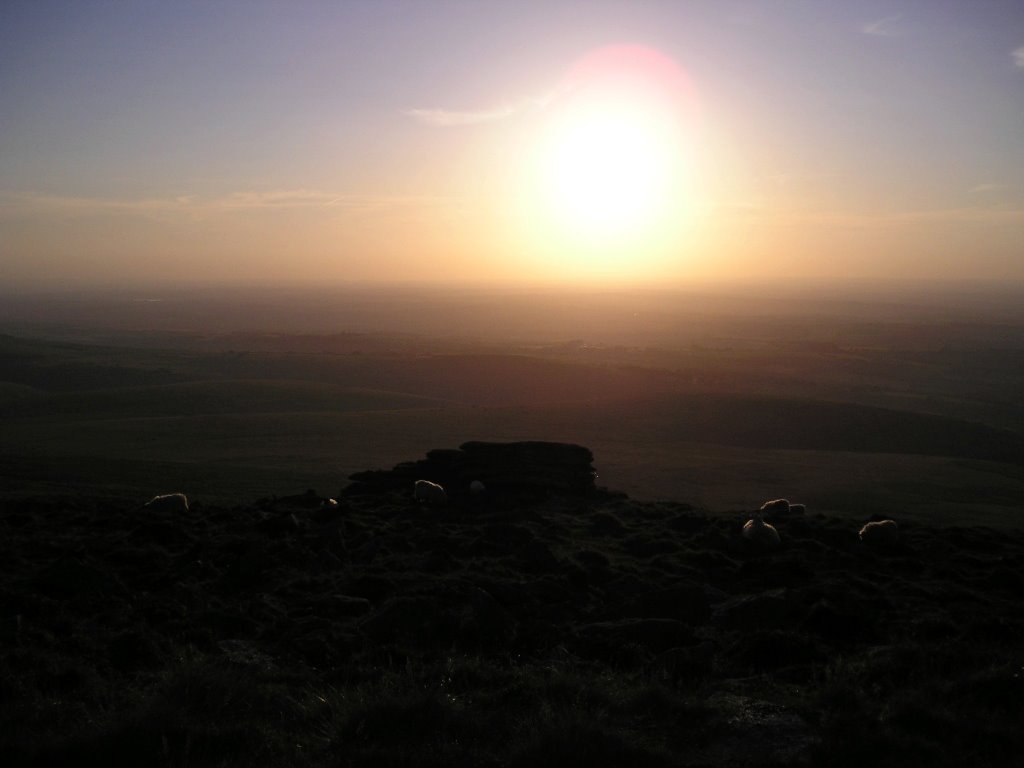 As a walker on the hills, especially solo, safety has to be taken serious. Even a windless and a sunny day walking along a good track can change.
 With one small stumble.
A quick scroll through the Mountain Rescue Teams incident reports (essential reading IMHO) quickly throw up sunny days gone wrong, particularly for the ill equipped or down right stupid. The hills are a wonderful play area, but unlike your local park help is usually not merely a yell away.
I don't mean to sound alarmist on this, just realistic.
That's Lesson One.
Read the introduction any good walking guide - they all give the same advice in the preface before the real book content starts.
Correct footwear; Carry map, compass, 1st aid kit, spare clothes, food, water (Kendal mint cake?) survival bag & waterproofs. Allow for sudden weather changes. Leave word of where you've gone.
It's that last piece of advice that is this post's message.
To quote the Ramblers' Association website advice:
"Before setting out, you should leave a copy of the card with a responsible person, and notify them on your safe return. In the event of an accident, help will arrive more quickly if rescuers have detailed information about your route. If you feel a detailed card would unnecessarily restrict your movements, at least leave a few notes about your intended whereabouts"
The Mountaineering Council of Scotland have a slightly less authoratitive tone, with some extremely well thought out considerations, but the message is the same
1. Tell someone where you're going
2. Check in regularly.
In the event of the unforseen, this is what a Mountain Rescue Team will use to find and help you, in the extreme case you're unable to help yourself.
Route cards can vary in layout and content for example this this or this but the basic information is the same. Here I am; Come find me.
If you like thisdetailled approach then one benefit can be a much closer attention to route detail, even down to the compass bearings etc, which is why the GPS related software usually offers routecard production as a feature.
But for me the route card is too prescriptive.
I know my main route, and how I intend to travel along it. If I fancy a sideways wander, I'm know from experience that I won't be too concerned about what I wrote on a piece of paper 300 miles away. I enjoy the freedom of the hills, not stomping along a tarmac road at a stated compass bearing and walking pace, worrying if I'm 20 minutes behind a schedule. Takes the U out of fUn.
Another drawback of a card. Where to leave it? Mounted on the dashboard of a parked car seems to me to be an invitation to the criminally minded. Not quite what I want to worry about high in the hills for a few days.
So, for what it's worth, here's my approach.
I write down my start point, day, and time. Then I provide a list of key features that I intend to cover, with escape routes that I may use in the event of bad weather (likely) or injury (fingers crossed - not something I've ever used, or hope to)
And now the important piece.
I arrange a regular check-in (usually nightly) via mobile phone with home to let them know whereabouts on my route I am, or any changes I've come up with since last we had contact. In the event I'm moving into a mobile signal shadow for any extended period of time, I arrange my call-in time accordingly.
In the event the signal is available but poor, a simple SMS message is all that's necessary. However a useable signal is usually available on a ridge, within sight of any small hamlet these days (I speak from personal experience here, of the Lake District, Wales & Dartmoor. Of Scotland I've no experience - but please leave a comment if you can help)
A quick aside - Mobile phones - love or hate them, they are here to stay and can have a use. Just remember the golden rule. Switch it on when you want to use it. And then switch it off. Battery life measured in weeks!
Anyway back to the plot ....
The standing instruction I always leave:
'Not heard from me for 2-4 hours beyond the pre-arranged check-in time? Dial 999 for a MRT call-out!' The time period is dependant on the terrain I expect to be travelling over.
I've wondered about that last instruction. I'd be mortified to be the cause of an unneccessary MRT call-out. Those guys already have their hands full, especially at this time of year, with the less aware. As a responsible adult I accept the risks associated with my particular pleasure, and will take reasonable steps to minimise them. And in case of difficulties I've warm clothes, tent, food and bedding to sit out most eventualities and to properly work out a reasonable escape plan, rather than complicate things in a panic.
But in the event my check-in seems likely to breach the time factor, I've given myself long enough to get off the hillside and to the nearest contact point - village, pub, bus route or worse case, a road to flag a car down.
Better that than MRT on the hills and missing their tea.
;-)
A minor disruption for me, as a new check-in can be arranged and then I'm back up that slope.
That's my safety net, and it's worked for me over the years. A mix of good sensey & flexibility from my perspective.
My tactics, and my opinion. For what it's worth
Stay safe out there. Remember indestructable immortality is for comic books. Take a few simple and sensible precautions.
And enjoy them thar hills, partners.
Labels: Backpacking Advice, Lake District, Mountain Resuce Team MRT BASECAMP, Trip Planning
All site material © John Hee - ask before you snatch